
About The Guys
Two lenses. One truth.
Every strategy has a financial architecture and a human architecture. Most strategy assessments examine only one half of the picture. Failure happens when the business logic and the brand promise are pulling in opposite directions and no one in the room has the independence, or the incentive, to speak the truth. That’s our job.

Through The Business Lens.
Will this actually work financially and operationally?
We interrogate the numbers, the assumptions, the competitive dynamics, and the execution timeline — looking specifically for the gap between what the strategy claims and what the evidence actually supports.
What is the most optimistic assumption — and what happens if it's wrong by 20%?
Does the organization have the capability to execute, or only the intention?
What are the three most likely competitive responses — does the strategy survive any?
What does the pre-mortem look like — and how probable is it?

Through The Brand Lens
Will customers believe this — and can the organization deliver what it's promising?
We interrogate what the strategy asks customers to believe, what it requires employees to deliver, and where the promise and the operational reality are already quietly out of alignment — before anyone has noticed.
Does this make the brand more distinct and at what cost?
What does it ask new customers to believe that’s credible?
Where does the brand promise collide with what the business model can deliver?
When the AI components underperform in practice, what does the brand look like that morning?
3x
higher failure rate when strategy and brand are reviewed in separate silos.
Forrester, 2023
+20%
revenue premium when business and brand strategy are tightly aligned.
Deloitte, 2023
80%
of leaders rate themselves strong on strategy — only 44% feel confident about execution.
McKinsey, 2024
The Principals
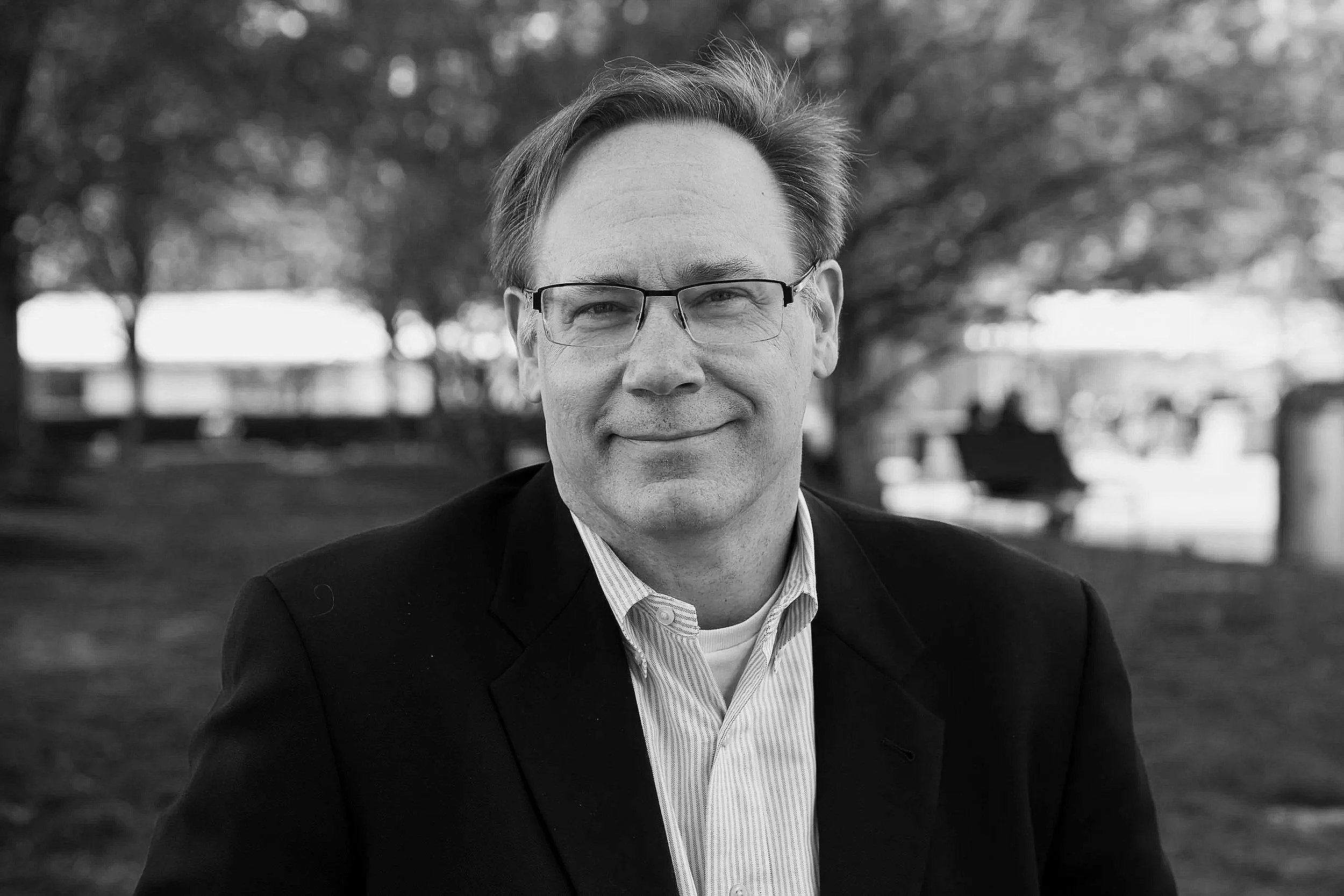
Independent Business Strategist
Roy Johanson
“The strategies that fail are rarely badly designed. They are built on assumptions that felt reasonable at the time — and were never honestly pressure-tested by someone outside their bubble with zero interest in the answer.”
Roy has been a McKinsey engagement manager, a licensed professional engineer, VP of Planning & Analysis at Amtrak, and a founder. A Ph.D. in Mechanical Engineering from Michigan paired with an MBA from Cornell produces something genuinely rare: a strategist who reads financial models and systems architecture with equal rigor. His methodology is data-first and assumption-hostile. He’s looking for the number someone put in the spreadsheet because it made the strategy work, not because the evidence supported it. In 30+ years across aerospace, automotive, rail, and technology, that number almost always exists. Roy finds it.

Independent Brand Strategist
Frank EE Grubich
“Everybody wants change, but nobody wants to be the first to change. Strategies fail because leadership over-estimates their teams’ enthusiasm for change and under-estimates the time and resources needed to do it."
Frank (aka FEEG) started designing identity systems before graduating from Carnegie Mellon. He co-founded Laughing Dog Creative Group nearly 35 years ago — 15 years, 20+ staff, 70+ awards — then closed it deliberately to pursue bigger challenges with bigger brands, including: LG, Verizon, Kimberly-Clarke, GE, Guardian Financial, CNH. Today, Frank works at the intersection of brand strategy and customer experience with one conviction: a brand is never what you say — it’s what customers say, what employees believe, and what the organization can actually deliver well. The miscommunication and misconceptions between those three truths is where brand strategies quietly collapse.
What makes 2nd Opinion different?
Every major consulting firm has a financial incentive to find problems that justify follow-on engagements. We don't. Our independence is structurally protected by the fact that we don't sell implementation, retainers, or any service beyond the assessment itself. This is by design — to preserve the integrity of our findings.
We Are Not For Sale After the Assessment
70+ Combined Years Cannot Be Replicated by AI.
AI can synthesize data faster than any human. It cannot replicate the pattern recognition that comes from having personally navigated seven decades of market cycles, organizational failures, brand collapses, and unlikely successes. We use AI in our assessment process — but as a research accelerator, not as a substitute for judgment. The difference between data and wisdom is experience. We have both.
Business and Brand — Simultaneously, Not Sequentially.
Most strategy reviews look at financial and operational viability first, then pass the findings to a brand or marketing team to execute. We examine both simultaneously — because most failures happen precisely at the intersection of business logic and brand truth. When those two things conflict, the conflict itself is the finding. No other firm is structured to unearth that conflict in real time.
We Work for the Truth, Not the Relationship.
Internal teams, boards, and retained consultants are all managing a relationship with the people who control their access, compensation, and future engagements. Not us. Our structural independence is what makes a 2nd Opinion assessment worth having. A second opinion from someone who needs your approval is just a first opinion in different packaging.
The Next Steps
Ready to see what a couple of independent guys have to say?
All engagements begin with a signed NDA. Confidentiality is not a policy. It is a prerequisite.